


A larger hippocampus is associated with better memory for life events, healthy cognition in normal aging and better mental health.
NeuroNautilus is a company focused on healthy cognition associated with a healthy hippocampus. The hippocampus is a region of the brain that works with the entire cortex, so when cells in the hippocampus develop connections with each other, they also connect with all of cortex!
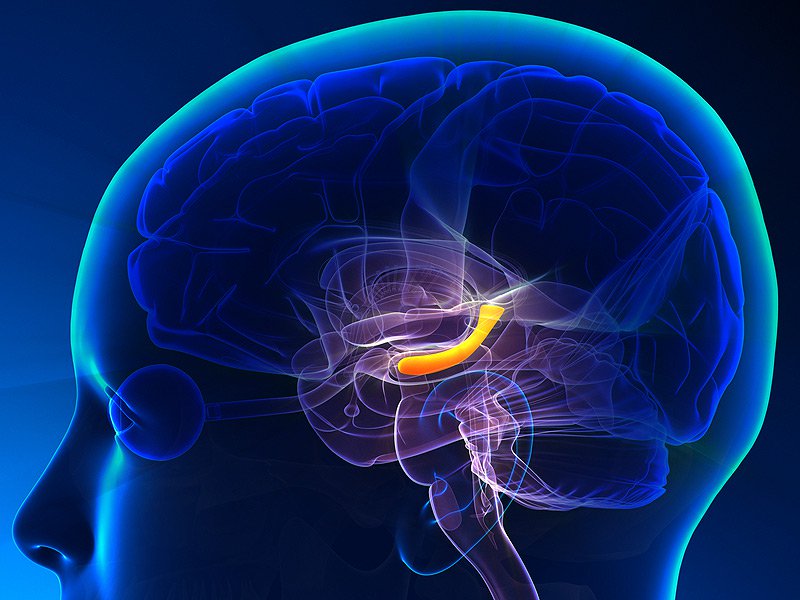
Train your Hippocampus with VeboLife in the comfort of your own home
We're all busy. Our program is designed to be done at home; at your own convenience. All it takes is 2 sessions of 1 hour per week for 16 weeks. Think of this time as physiotherapy for your brain, only without having to go anywhere.
Vebolife is designed to be challenging, but it is also rewarding at the same time. You'll feel the difference in as early as a few sessions.

Stimulate your Hippocampus
If you find yourself on auto-pilot, for example when you go into a room and can't remember why you went there, you were not using your hippocampus at that time. Instead, you were using a part of the brain called the Caudate Nucleus, which is involved in habits or auto-pilot.
We have invested decades of research in studying the Hippocampus. Research has shown that people with a larger hippocampus have reduced risk of developing multiple disorders, such as Alzheimer's Disease and lead healthier lives.
Our program not only strengthens the Hippocampus, but can lead to growth in grey matter throughout the entire cortex!

Personal Training
Our professional group of coaches and mentors are here to help you every step of the way. You'll have a dedicated coach assisting you while you perform each session, providing tips and motivation on how to best complete the program to see the best results.
Our goal is to help you make the most of this training and to experience results that make your life a Vebolife!
How is VeboLife different from other cognitive training?
VeboLife is the only cognitive training program that was scientifically proven to stimulate grey matter in the hippocampus.



















Dr. Veronique Bohbot started doing research on the hippocampus in 1988. She received her Ph.D in the field of Psychology and Cognitive Neuroscience in 1997 at the University of Arizona under the guidance of experts recognized in the field of memory. Of particular note is Dr. Lynn Nadel, who published the break-through theory on the role of the Hippocampus with Dr. John O’Keefe, Nobel prize winner in medicine and physiology, October 2014.
With more than 150 scientific presentations on memory at national and international conferences and over 45 articles to her credit, Dr. Bohbot is an expert in the field of spatial memory and navigation. She studies spatial memory in individuals of different age groups including children, young adults, and the elderly, but also spatial memory in relation to various neurological and psychiatric disorders. These include mild cognitive impairment, Parkinson’s disease, diabetes, attention deficit hyperactivity disorder (ADHD), and Schizophrenia.
Dr. Bohbot's research uses cutting edge technology such as virtual reality, functional neuroimaging, structural neuroimaging, genetics, and transcranial magnetic stimulation. Dr. Bohbot is currently an Associate Professor in the Department of Psychiatry at McGill University. With her research group from the Douglas Mental Health University Institute, she has developed a training program to improve spatial memory and reduce the risk of neurological and psychiatric diseases. This targeted program has been proven to improve not only spatial memory but also the function and size of the Hippocampus.
The Hippocampus and Mental Health
Previous studies have shown that when people are healthy, those with less grey matter in the hippocampus have a higher risk of developing disorders like Alzheimer's Disease, post-traumatic stress disorder (PTSD), Schizophrenia, and depression. In other words, a small hippocampus predisposes people to be at a greater risk of being later diagnosed with a mental illness. For example when older adults complained about having memory difficulties, those with a small hippocampus were the ones who were diagnosed with Alzheimer's disease 5 years later. People with a larger hippocampus were protected against Alzheimer's disease. For this reason, it is important to have a larger hippocampus when still healthy, in order to reduce the risk of getting diagnosed with a mental disorder.
Scientific studies suggest that people who have a larger hippocampus are less likely to later develop Alzheimer's disease, but also PTSD, depression, and Schizophrenia. Other disorders are also associated with a small hippocampus, namely traumatic brain injury, ADHD, addiction, obsessive compulsive disorders, bipolar disorders, Parkinson's etc. A larger hippocampus is associated with healthy cognition. So generally speaking a healthy hippocampus is associated with better mental health.
The Hippocampus and Episodic Memory
What is memory? Memories are the brain’s special way of encoding, storing and recalling information which comes into the brain. This information is categorized and stored for later retrieval.
There are different types of memory:
1). Semantic Memory: remembering factual information. An example is the knowledge that the Eiffel Tower is in Paris.
2). Episodic Memory: our memory of events that occurred in a specific time and place. For example, what you did on New Year's Eve.
An important part of episodic memory is spatial memory: the "place" information relating to a specific event we are trying to remember. The first thing we often remember is where an event actually took place, so this ability to learn and recall the spatial layout of an environment is very important. It can also be used in the present by helping us orient ourselves in environments, navigate them, and locate objects within them.
Only Episodic Memory relies on the critical contribution of the hippocampus. Patients with selective damage to the hippocampus can learn semantic facts normally. For this reason, not all memory training programs will stimulate the hippocampus.


The Hippocampus and Spatial Memory
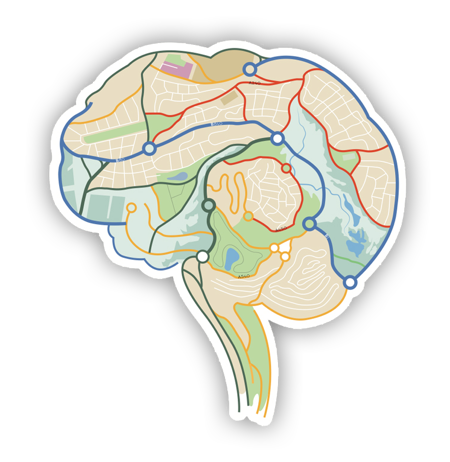
As with episodic memory, spatial memory critically relies on the hippocampus. Specifically, the hippocampus allows us to build cognitive maps of environments that we need to navigate. Cognitive maps are mental representations of an environment formed by the learning of spatial relationships between environmental landmarks (reference points, such as trees, rivers, mountains or buildings). Cognitive maps are continuously forming and updating as we navigate.
Our Hippocampus allows us to navigate environments effectively using cognitive maps — it's like a built-in GPS!

OUR HIPPOCAMPUS DESCREASES IN SIZE OVER TIME
As we get older, the size (volume) of our hippocampus decreases. A smaller hippocampus is a serious risk factor for developing neurological conditions like dementia and Alzheimer's Disease.
The more we use our hippocampus across our lifetime, the more we can fight back this decline and counteract the risk of developing conditions like dementia.
The Caudate Nucleus of the Striatum
Using cognitive maps and the hippocampus isn't the only way we can navigate. There is a different system, which recruits a part of the brain called the caudate nucleus of the striatum. After traveling the same route in an environment over time, navigating can become a habit or a routine. We don't need to think about the path we take anymore, it's more automatic, like being on an auto-pilot. This type of navigation is called stimulus-response because it evolves out of making the same response at a given situation multiple times (for example, always turning left at the end of the street to go to the store).
A large Caudate Nucleus has been shown to be associated with Alzheimer's Disease.
Navigation Strategies
Spatial strategy
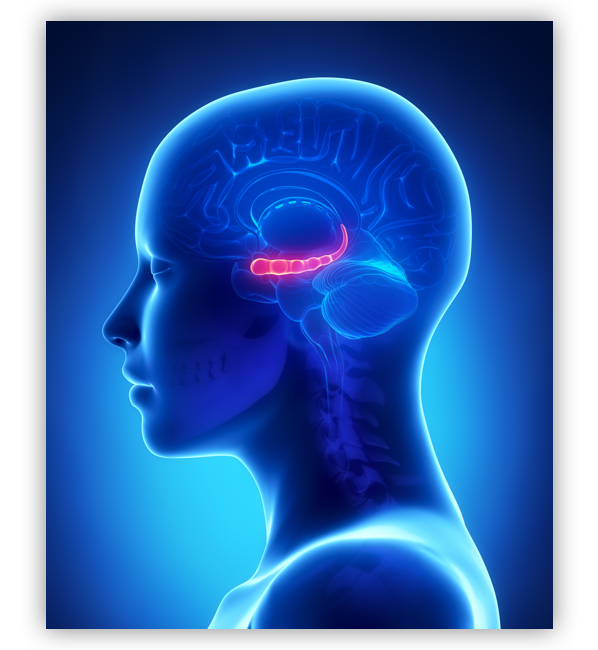
The SPATIAL STRATEGY, which relies on the hippocampus, involves building relationships between environmental landmarks, such as buildings or parks, to form cognitive maps (mental maps) of an area.
Response Strategy
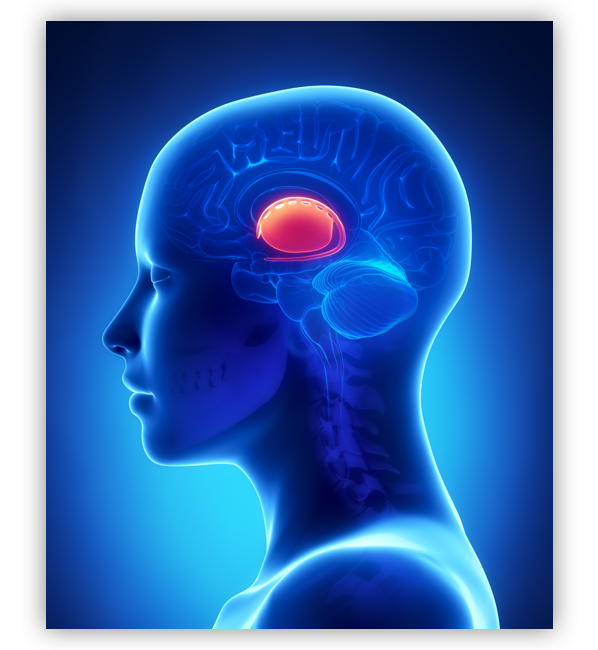
The RESPONSE STRATEGY relies on the caudate nucleus of the striatum. It involves learning a route by performing a sequence of movements (e.g., turn right) from specific points (e.g., at the hospital). The RESPONSE STRATEGY does not involve building a cognitive map.
Competing systems
The hippocampal-mediated navigation system and the caudate nucleus-dependent system compete. Although we can use both, we cannot use them at the same time.

Our research shows that the larger our caudate nucleus becomes, the smaller our hippocampus gets. These two brain regions compete.
WE USE Spatial Strategies less as we age
Research shows that we use spatial strategies less as we get older, in favour of more automatic, stimulus-response driven navigation. That means we are naturally less reliant on hippocampus dependent cognitive maps as we age.
This could be related to the natural decline in the size of the hippocampus, contributing to more response strategy use. There are other factors to consider as well, such as an increasing reliance on technology, stress and reward which promote stimulus-response strategies.

The risk associated with over-use of response strategies:
Your RESPONSE STRATEGY mode is very strong and is constantly active, especially when you are in a hurry and do not have time to build cognitive maps, when you perform routine actions, and when you feel stressed and fall back to autopilot.
The RESPONSE STRATEGY can dominate over the SPATIAL STRATEGY and this can lead to reduced stimulation of the hippocampus.
However, RESPONSE STRATEGIES can be efficient to help you create healthy habits.
As always, balance is the key!
How Vebolife helps
Vebolife is a software specially designed to strengthen the hippocampus, helping you maintain that all-important balance. The program is composed of 46 virtual environments, which increase in difficulty as you progress through the training. A focus is placed on novelty to encourage the formation of new relationships, which recruits the hippocampus. All the tasks were specially designed to maximize the use of spatial memory requiring the hippocampus, by forming relationships between objects and yourself, and by using cognitive maps.
Vebolife is different than other brain training programs because it is the only cognitive training software proven to stimulate the hippocampus. It's challenging and elements of reward that are built into other program are not present in Vebolife. This is because our reward system is closely tied to the caudate nucleus and we need to avoid this if we are to focus on our hippocampus. Further, the Vebolife software adjusts the level of difficulty so that it allows us to make errors, since learning through errors stimulates the Hippocampus.
If you're serious about improving your mental health by stimulating the hippocampus then Vebolife is the right tool for you!
Results




Select Press
MSNBC GPS Addict
Huffington Post Quebec Pilote Automatique
Huffington Post Quebec La Mémoire Spatiale
Huffington Post Quebec Jeux Vidéo D'Action
French TV, General Lecture: Canal Savoir Ecole MiniPsy
French TV, Scientific Report: Tele Quebec Code Chastenay
Brief Scientific Lectures by
Dr. Bohbot
Select Scientific Articles
Persson K, Bohbot VD, Bogdanovic N, Selbaek G, Braekhus A, Engedal K. (2018). Finding of increased caudate nucleus in patients with Alzheimer's Disease. Acta Neurologica Scandinavica. 137(2):224-232. (693KB)
Konishi K, Joober R, Poirier J, MacDonald K, Chakravarty M, Patel R, Breitner J, Bohbot VD. (2017). Healthy versus Entorhinal Coritcal Atrophy Identification in Asymptomatic APOE4 Carriers at Risk for Alzheimer's Disease. Journal of Alzheimer's Disease. (1.1 MB)
Drisdelle BL, Konishi K, Diarra M, Bohbot VD, Jolicoeur P, West GL. (2017). Electrophysiological evidence for enhanced attentional deployment in spatial learners. Experimental Brain Research. 235(5):1387-1395.
Andruchow ND, Konishi K, Shatenstein B, Bohbot VD. (2017). A Lower Ratio of Omega-6 to Omega-3 Fatty Acids Predicts Better Hippocampus-Dependent Spatial memory and Cognitive Status in Older Adults. Neuropsychology. 31(7):724-734. (729KB)
Bohbot VD, Copara MS, Gotman J, Ekstrom AD. (2017). Low-frequency theta oscillations in the human hippocampus during real-world and virtual navigation. Nature Communications. 8:14415. (782KB)
Konishi K, Bhat V, Banner H, Poirier J, Joober R, Bohbot VD. (2016). APOE2 Is Associated with Spatial Navigational Strategies and Increased Gray Matter in the Hippocampus. Frontiers in Human Neuroscience. 10:349. (552KB)
Robaey, P., McKenzie, S., Schachar, R., Boivin, M., and Bohbot, V. D. (2015). Stop and Look! Evidence for a bias towards virtual navigation response strategies in children with ADHD symptoms. Behavioral Brain Research. 1(1):1-7. (894KB)
Ledoux, A. A., Phillips, J. L., Labelle, A., Smith, A., Boyer, P., Bohbot, V.D. (2014). Structural hippocampal anomalies in a schizophrenia population correlate with navigation performance on a wayfinding task. Frontiers in Behavioral Neuroscience. 8(88):1-11. (227KB)
Bohbot, V. D., Del Balso, D., Conrad, K., Konishi, K., Leyton, M. (2013). Caudate nucleus-dependent navigational strategies are associated with increased use of addictive drugs. Hippocampus. 23: 973-984. (499KB)
Konishi, K., Etchamendy, N., Roy, S., Marighetto, A., Rajah, N., Bohbot, V. D. (2013) Decreased functional magnetic resonance imaging activity in the hippocampus in favor of the caudate nucleus in older adults tested in a virtual navigation task. Hippocampus. 23(11):1005-14. (467KB)
Konishi, K., Bohbot, V. D. (2013) Spatial navigational strategies correlate with gray matter in the hippocampus of healthy older adults tested in a virtual maze. Front Aging Neurosci. 5:1. (3.7MB)
Wilkins, L. K., Girard, T. A., Konishi, K., King, M., Herdman, K. A., King, J., Christensen, B., Bohbot, V. D. (2013). Selective deficit in spatial memory strategies contrast to intact response strategies in patients with schizophrenia spectrum disorders tested in a virtual navigation task. Hippocampus. 23: 1015-1024. (227KB)
Ledoux, A.A., Lynne Phillips, J., Labelle, A., Smith, A., Bohbot, V. D., Boye,r P. (2013). Decreased fMRI activity in the hippocampus of patients with schizophrenia compared to healthy control participants, tested on a wayfinding task in a virtual town. Psychiatry Research. 211(1): 47-56. (746KB)
Bohbot, V. D., McKenzie, S., Konishi, K., Fouquet, C., Kurdi, V., Schachar, R., Boivin, M. & Robaey, P. (2012) Virtual navigation strategies from childhood to senescence: evidence for changes across the life span. Front Aging Neurosci. 4:28. (613KB)
Etchamendy, N., Konishi, K., Pike, B.G., Marighetto, A., & Bohbot, V.D. (2012) Evidence for a virtual human analog of a rodent relational memory task: a study of aging and fMRI in young adults. Hippocampus 22:869-80. (600KB)
Bohbot, V.D., Lerch, J., Thorndycraft, B., Iaria, G. & Zijdenbos, A. (2007) Gray matter differences correlate with spontaneous strategies in a human virtual navigation task. Journal of Neuroscience 27, 10078-10083. (200KB)